
how to be disgustingly focused

I was having dinner with my friend the other day where we were trying to guess each other’s screen time for fun. I tried guessing her screen time first.
“2 hours?”
“No…”
“4 hours?”
“No…”
“Okay, 8 hours?”
My friend sheepishly showed me her screen. It showed 8 hours 12 minutes average that week.
I showed her mine, which was at 5 hours 34 minutes. I brushed it off, saying I was busy that week, which was why it was lower than usual.
Though I have gotten a little better at cutting down this number with a few techniques, the truth is I used to be diabolically addicted to my phone. I clocked in similar average screen times as my friend, if not worse, with my personal record being 12 hours+ at the peak of my depressive episodes. Back then, the number was far from a quirky stat to compare over dinner, but rather a source of shame.
The Stigma We Don’t Question
There is a type of stigma attached to having a higher-than-average screen time. It is not so much the screen time you have, rather the indication of your daily habits.
Doomscrolling into the late, quiet hours of the night, even when you feel your eyes grow heavy. Watching a stranger yap about a niche topic you love because you don’t have anyone in your life to talk about it with. Listening to a productivity podcast while doing your laundry because laundry is boring and the silence is deafening.
If you have a “low” screen time, it gives off the impression of a self-controlled and/or busy person, who has a life to attend to. Time is precious, you have goals to achieve, and self-control over your impulses. There is no habit of going to your phone as a form of escapism.
There is no need to doomscroll because you have methods to emotionally regulate yourself to combat boredom, anxiety, and loneliness.
There is no need to watch a stranger yap online because you already have friends to speak about your niche interests to.
There is no need to listen to a podcast because you know you are a productive person and don’t need a podcast to know that (and if you are extra lucky, you have someone who does your laundry for you).
This stigma didn’t appear out of nowhere. It’s downstream of a culture that has spent the last decade treating attention as the last scarce resource, and self-discipline as the last virtue money can’t buy.
“Digital minimalism,” dumbphones, screen time leaderboards all quietly imply the same thing: that the number on your settings app is a referendum on your character.
We’ve turned a battery-usage-style metric into a morality score. This metric can’t even tell the difference between three hours of doomscrolling and three hours of video-calling your partner. It was never built to judge you in the first place.
Focus Is a Signal, Not the End Goal
I took a look at my friend’s screen time and looked at the most-used apps section.
Her top 3 most used apps were YouTube, WhatsApp, and Libby.
I asked her what type of videos she was watching on YouTube, and she mentioned it was mostly social commentary videos on the state of the software engineering industry and Claude skills she was learning (valid). WhatsApp was used mainly to video call her boyfriend, and Libby was used to read psychology books.
When looking at the bars on the screen, they were relatively balanced each hour, indicating that she was sticking to doing one thing at a time instead of switching between apps.
Her screen time may seem high at first glance, but looking at hers gave me a fresh perspective. In the past, I had been quick to feel guilty over my phone usage and the time slipping through my fingers (literally).
The thing is, a screen time means so much more. It is an indication of what we find important, what we want to grow in, and the people that we cherish in our lives.
I realised I was chasing the wrong thing altogether.
A “low” screen time is an arbitrary vanity metric. People chase focus as a skill with apps, productivity hacks, and “deep work” culture when it is simply a signal as to what you find important in your life right now.
If your phone helps you move the needle toward the larger goals in your life, why the f*ck does it matter what the screen time is?
You could be playing subliminal music on it 8 hours a day if it helps you get into the zone.
You could be watching YouTube to learn to code for 8 hours a day if it helps you ship an app in the next few months.
The issue is fragmented attention, where constant content consumption does not move the needle toward your goals. Instead, it leaves you where you started.
Two people can post the same number and be living completely different lives. One circling the drain, one mid-flow. The number is identical but the meaning behind the number is not. That’s the part the stigma flattens out.
“Even in the most difficult situations, when you focus on what is right in the present moment, it makes you happier, today.” — Dr. Spencer Johnson, The Present
My friend’s interests lie in coding, social commentary, and psychology. When she learns something online, time distorts and she is fully absorbed, reflecting her strong alignment and passion for it. When she talks to her boyfriend for an hour straight, she is also aligned with him and does not feel time passing by.
The Flow State
Mihaly Csikszentmihalyi was the psychologist who named the psychological concept of “flow,” after interviewing hundreds of rock climbers, musicians, athletes, surgeons, and artists. He was fascinated by people who got so lost in their work they ignored their own bodily needs.
What struck him wasn’t just that these people focused well. It was that the focus cost them nothing. They weren’t gritting their teeth through it; they came out the other side energised rather than depleted, the way most of us feel after a long stretch of forced concentration. He went on to describe people who seek out this state often as having an “autotelic personality”, people who do things for the sake of doing them, not for the medal, the promotion, or the praise that comes after.
The doing is the reward.
If you have had a moment where you ignored hunger, thirst, or sleep, it sounds uncannily similar to when you have spent hours late into the night on your phone. So many of us have already experienced this state.
The prerequisite to entering a flow state is to become absorbed by a challenging task such that it lifts your mood and time fades away.
The conditions to enter are a balance between:
Challenge
Skill
Clear goals
Immediate feedback
Distorted sense of time
Loss of self-consciousness
Most importantly, it means doing the activity because it is rewarding, not for the outcome.
It’s worth noticing that a phone can technically supply all six conditions, a game has clear goals and instant feedback, a comment section gives you a challenge to win, a feed gives you the loss of self-consciousness.
That’s precisely why phones are so good at imitating flow without ever delivering its aftermath. Real flow leaves you feeling satiated.
The imitation leaves you empty and reaching for the phone again ten minutes later. The tell isn’t how absorbed you felt going in, it’s how you feel when you put the phone down.
What you focus on without trying reveals what you actually value.
With the abundance of content that we consume, it is easy to find out where our focus goes.
“Self-Help” Assumes There’s a Problem Even When There Isn’t
Most modern advice treats focus as something you build through discipline. You need to lock your phone in a jar, make the largest cup of coffee, and work through sheer force. However, the flow state is something you get immersed in effortlessly, by tasks that match your skill level and naturally draw your attention.
It is located within you and cannot be built. If it is something you need to grit your teeth to get through, then it would be near impossible to derive any enjoyment from it.
This is where most productivity advice quietly misdiagnoses the problem. It assumes the issue is a willpower deficit, so the fix is always more friction: lock boxes, app blockers, accountability partners.
But friction doesn’t create alignment, it just makes misalignment harder to act on.
You can build the most elaborate system in the world to keep yourself off your phone, and you’ll still feel restless the second the system isn’t watching, because the system did not ask what you were actually trying to feel in the first place.
You Already Know How to Focus
Go to your screen time and look at the top 3 most-used apps.
Go to those apps and look at all the content you have liked, commented on, or shared in the past week.
Those are the topics that you care about, that speak to you, or that entertain you.
Ignore the actual screen time number that you see.
If you spent 3 hours doomscrolling on X, good.
What caught your attention? What made you so absorbed that you spent 3 hours on it?
What if you produced or created something related to that topic?
You see, the world tends to pathologise our absorption instead of reading it as information on what you were built for.
What would it look like if, instead of consuming, you started producing what you are interested in?
When you first start creating, it is the hardest thing. Since you are figuring out a new skill, it will look like this.
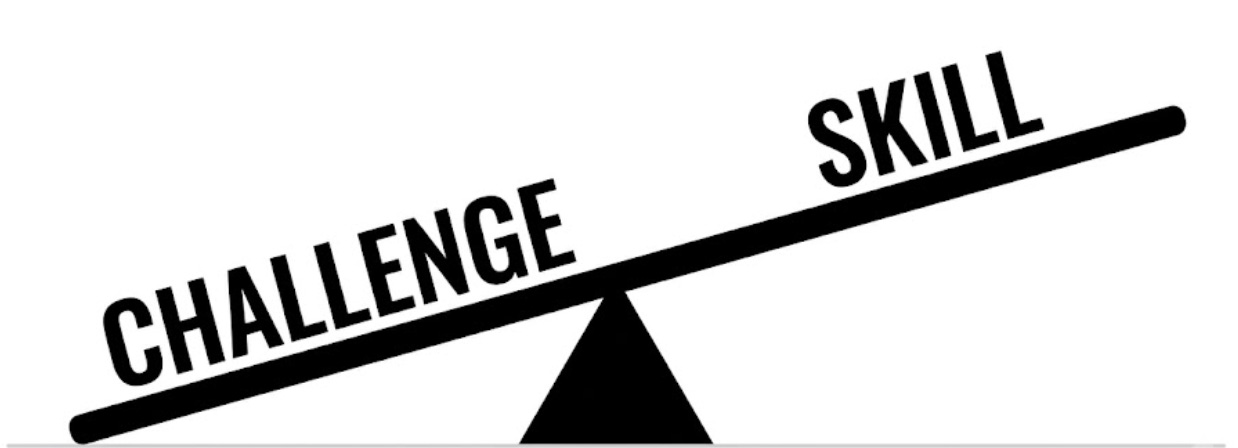
There is no flow state in the beginning.
You will want to stop after the first month because most people do. If you stick to it long enough and find the joy in it each moment, you will enter a flow state. It happens when you least expect it, that’s the best part. You can only get better at your craft with time and consistent attention. It is simply a matter of sticking with it.
The world we live in now promises 100 distractions when we are focused. It is the distractions that we need to overcome when they do inevitably show up.
Imagine how much you can change your life by honouring your interests and creating something instead of demonising it.
When you start creating and losing track of time, your screen time will decrease, because you have now become busy living your life.
Am I advocating to delete the culprit apps off your phone and never use them again?
Of course not.
Use it as information to learn about yourself.
Take action.
Your life will change.